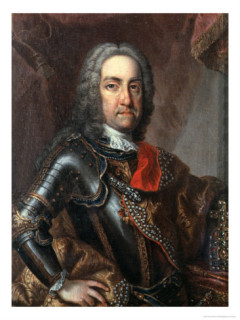
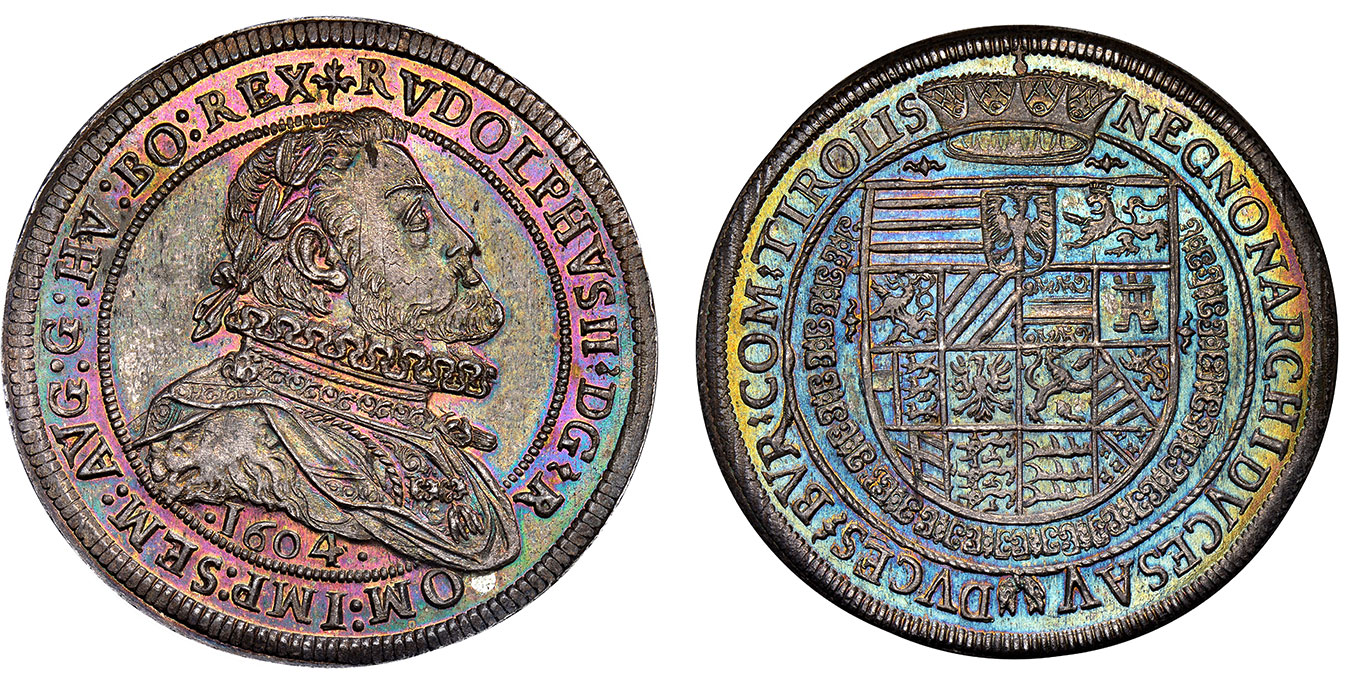
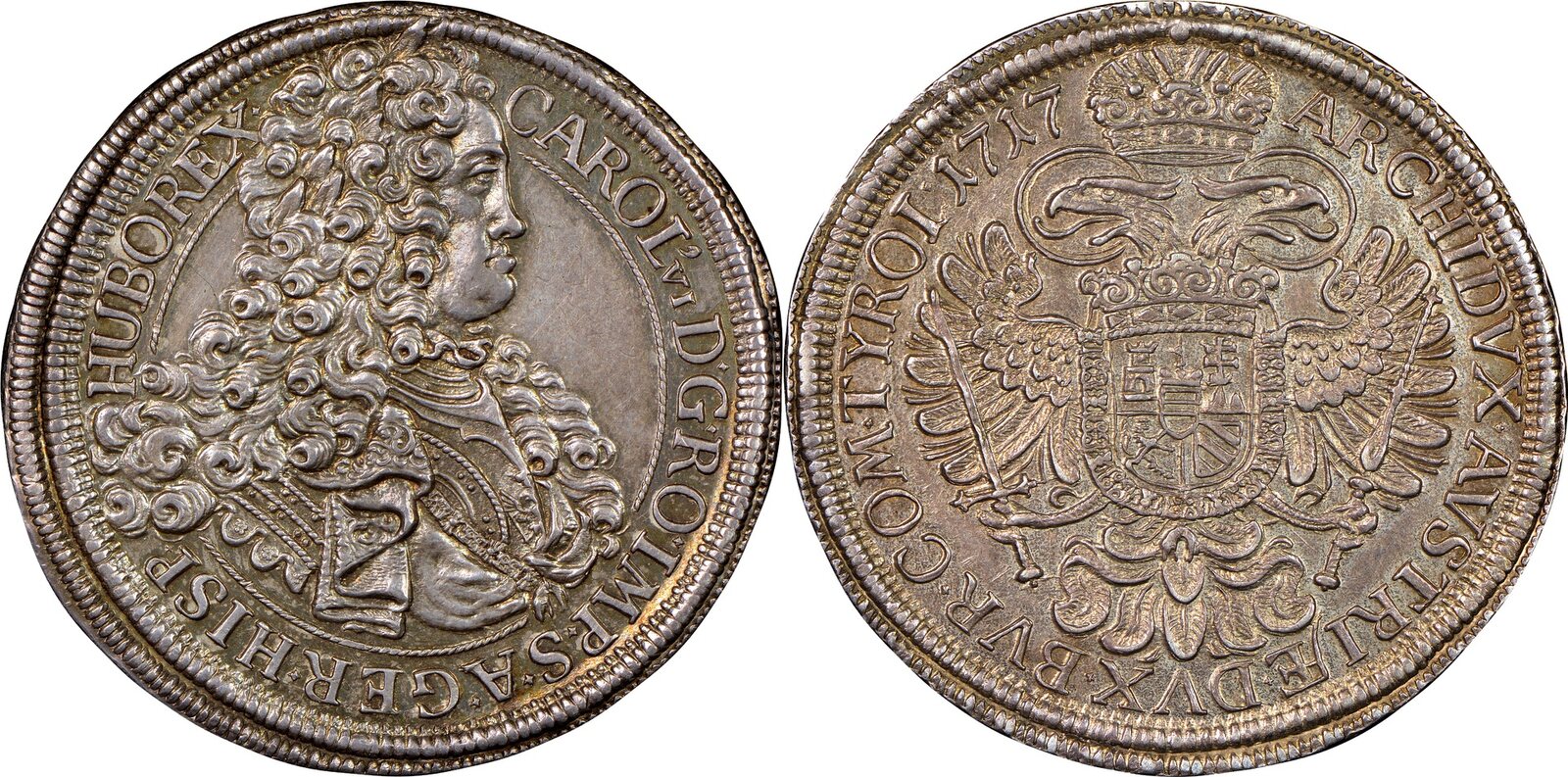
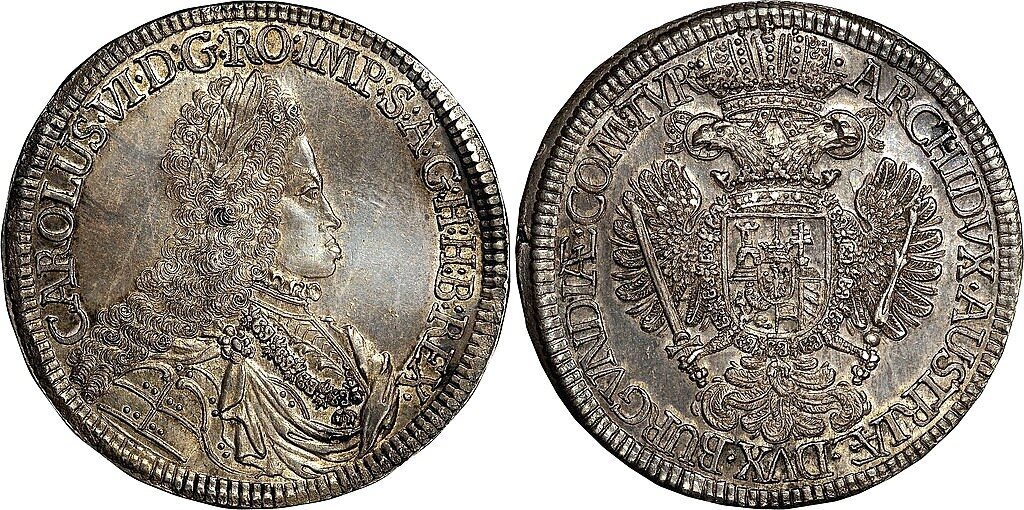
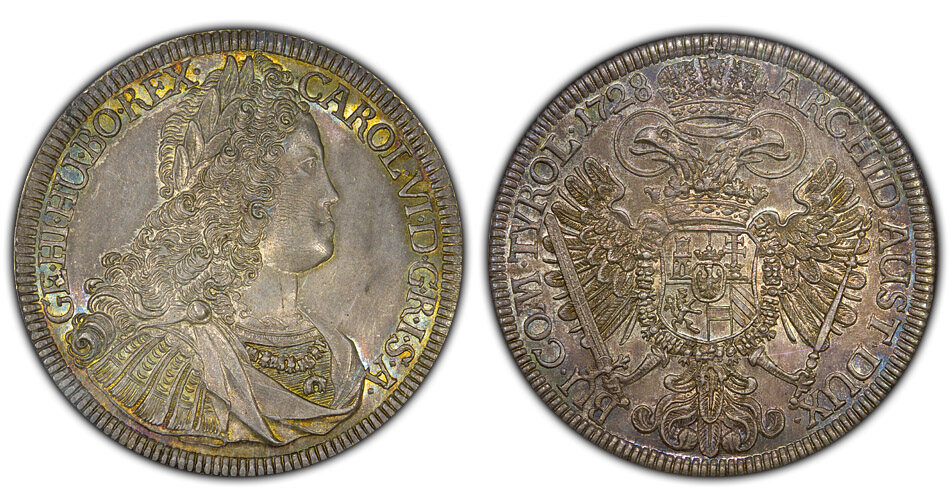
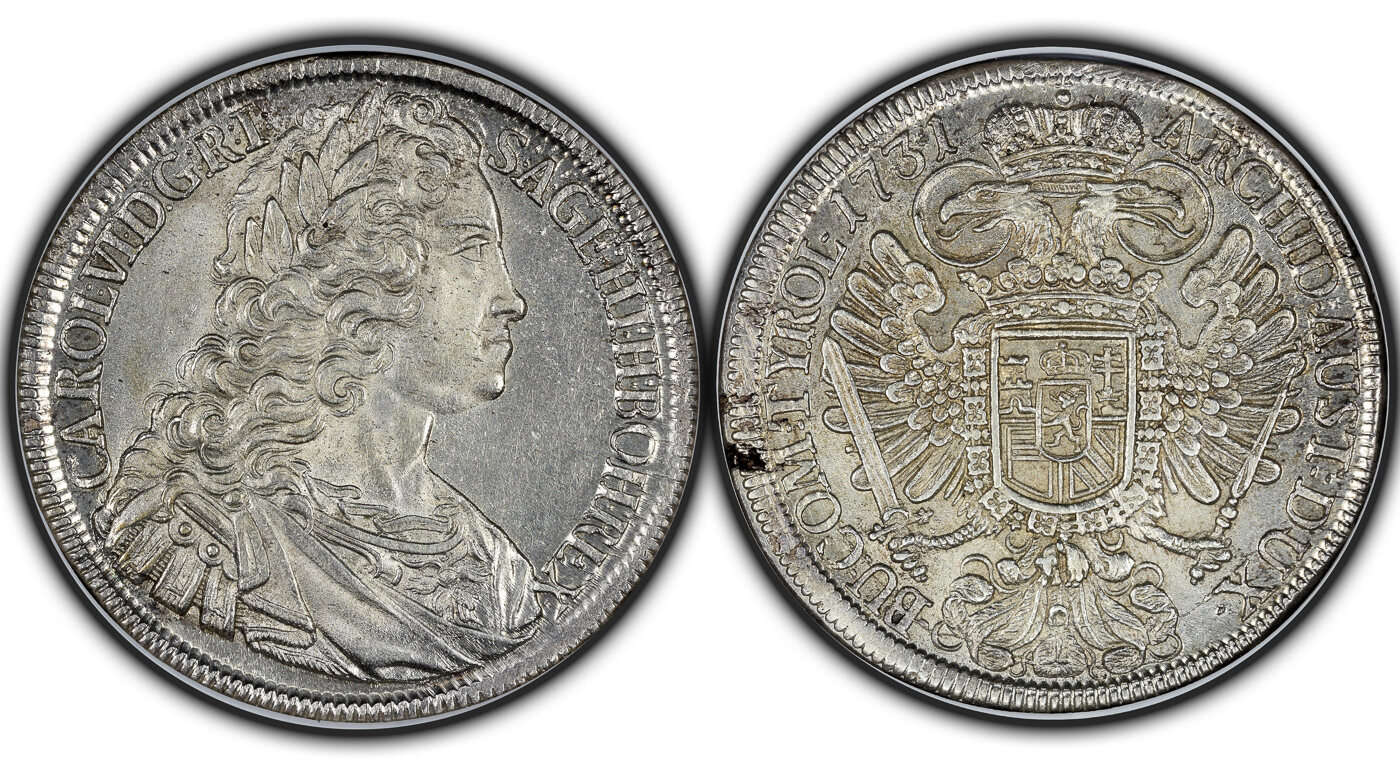
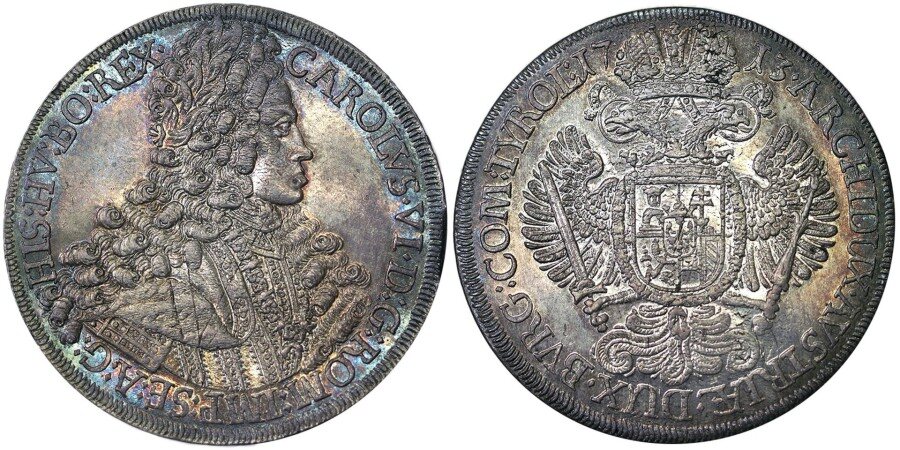
1713. Charles VI (1711-1740) Taler. DAV-1050. Hall Mint. Toned, multi color coin, with pristine fields. NGC MS-64.
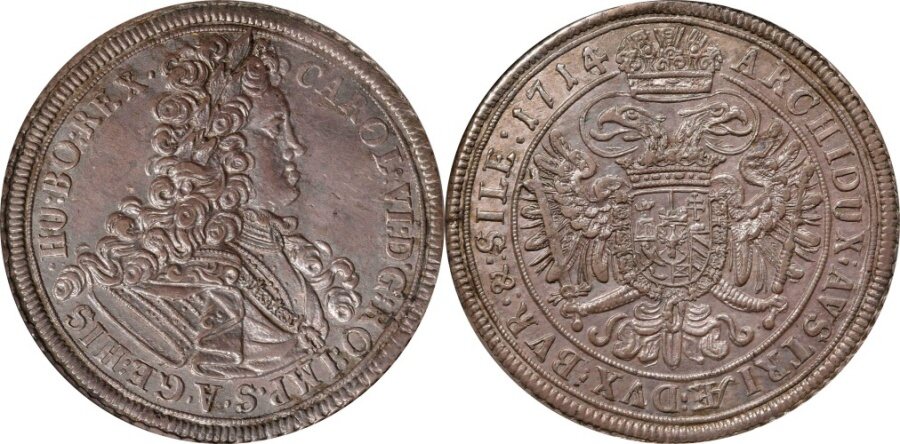
1714/3. Bohemia. Charles VI (1711-1740) Taler. Breslau Mint. DAV-1089; KM-786.1. Overdate variety. Displaying a fairly clear overdate, this near-Mint crown enchants with an enticing cabinet nature to the toning, all while some resounding brilliance emanates from the protected areas. With respect to wear and handling, hardly any is noted, undoubtedly making this a superior and premium-quality piece for the grade assigned. NGC AU-58.
Provenance: The Augustana Collection.
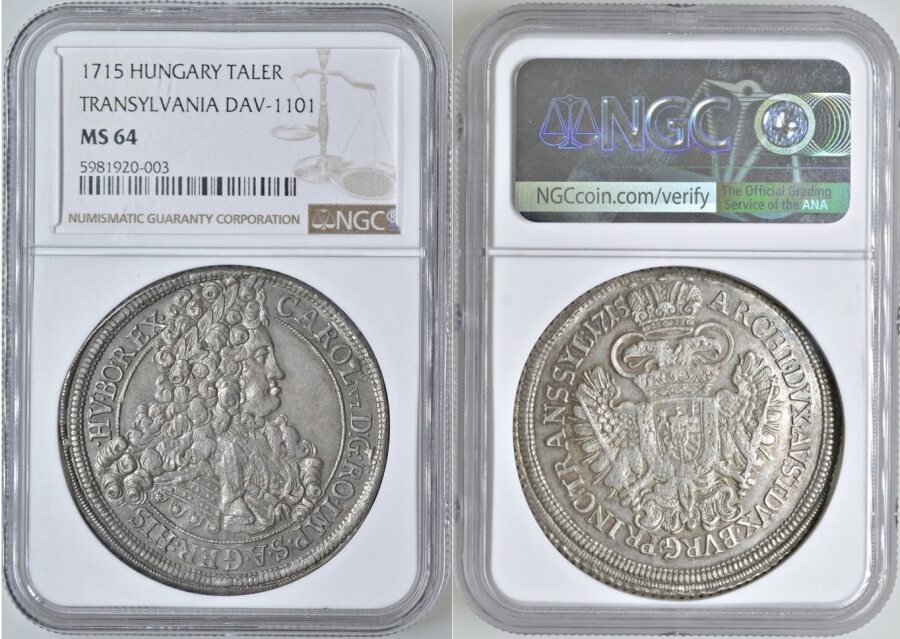
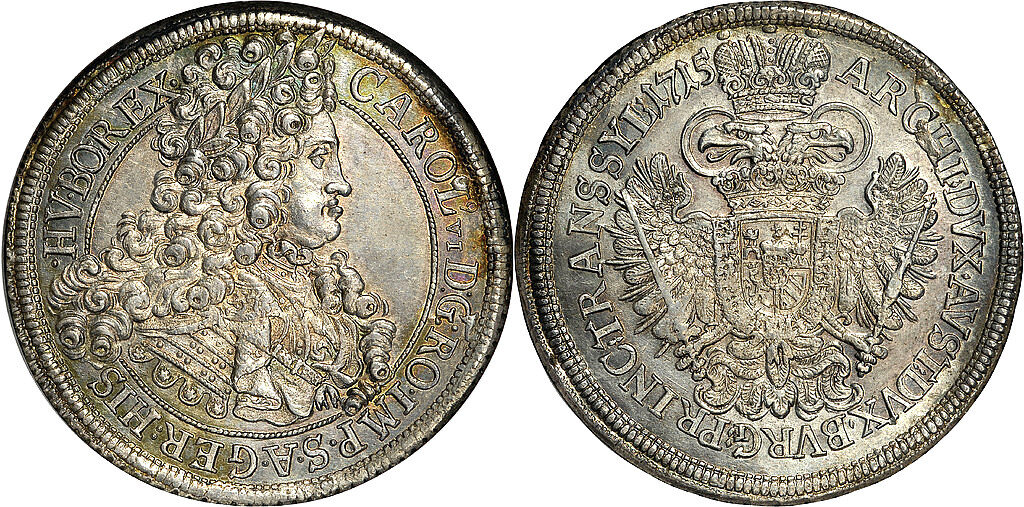
1715. Charles VI (1711-1740) Taler. DAV-1101. Transylvania. Siebenbürgen Mint. One of the scarcest pieces in the collection. Seldom seen in auctions and only graded mint state piece by either grading service. Beautiful toning over remaining luster. 1715/3 Overdate. A centerpiece of the collection. NGC MS-64.
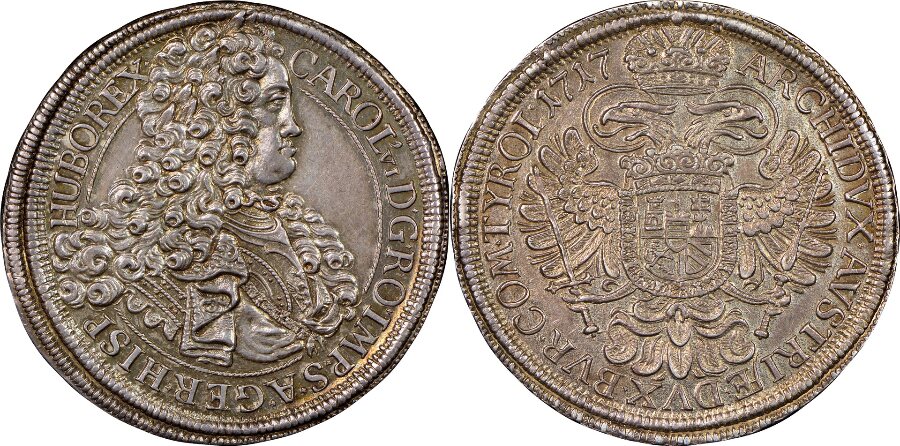
1717. Charles VI (1711-1740) Taler. DAV-1035. Lower Austria, Vienna Mint. Superb strike and eye appeal beyond what this image could capture.. NGC MS-64.
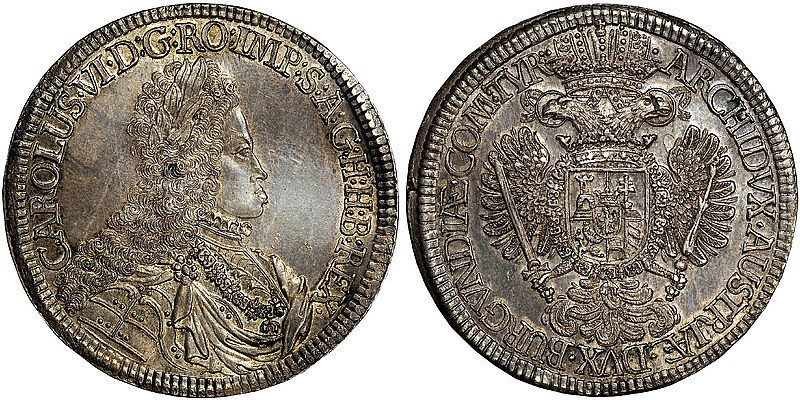
ND. Charles VI (1711-1740) Double Taler. DAV-1049. Tyrol, Hall Mint. Old aged cabinet toning over lots of luster. Very scarce no date variety type. Wonderful showcase piece. NGC MS-64.
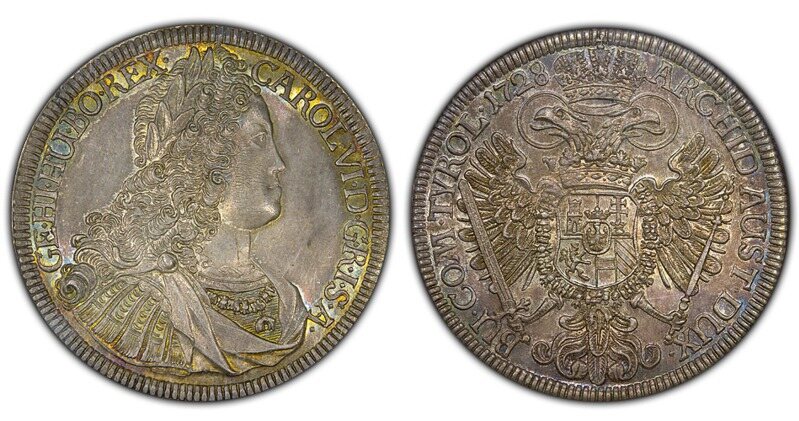
1728. Austria. Charles VI (1711-1740) Taler. DAV-1054. Herinek-346. Hall Mint. Colorful piece, well struck with lots of underlying luster. Superb coin which possesses both top end eye appeal and a scarce grade. NGC MS-65.
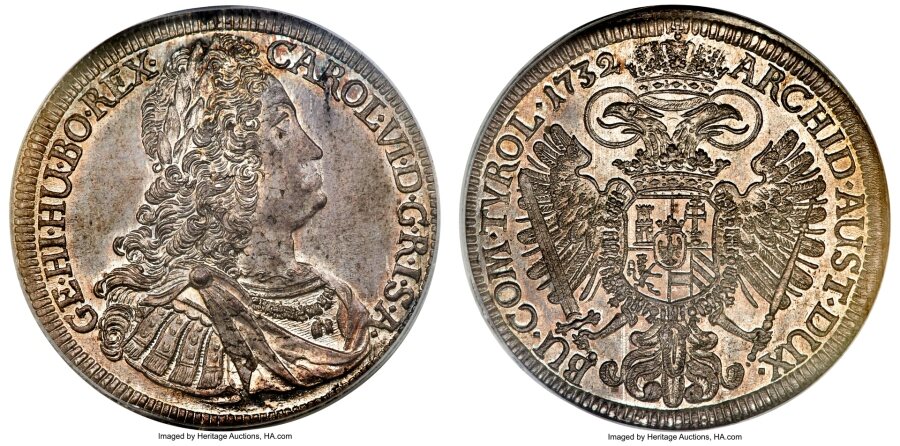
1732. Austria. Charles VI (1711-1740) Taler. DAV-1054. KM-1617. Herinek-346. Hall Mint. An absolutely sublime piece with an allure and level of preservation that is likely irreplaceable. Rolled on a characteristically curved flan, the example here presented is exceptionally toned, displaying lustrous argent surfaces blessed with delicate graphite hues, nestled gently within legends and an upper periphery endowed with a captivating honeyed amber color. The reverse reveals a luxurious silver patina decorating devices which could not be presented with greater boldness, every feature and crown ornament well-defined and sparkling invitingly. An immaculate taler, the finest graded across both PCGS and NGC. PCGS MS-66.
From the Cape Coral Collection of European Crowns
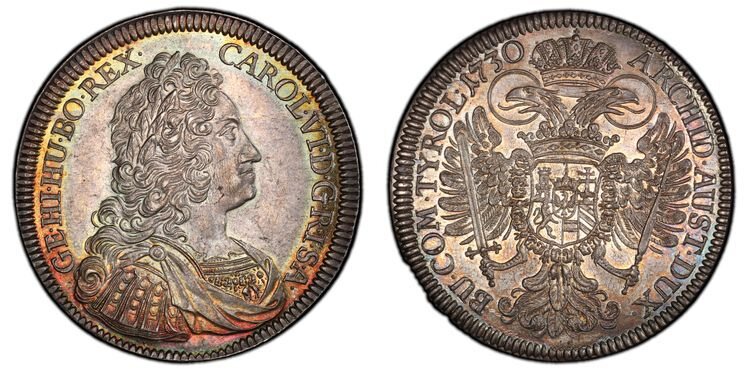
1728. Austria. Charles VI (1711-1740) Taler. DAV-1055. KM-1639.1. Hall mint. Obv: Laureate, draped, and armored bust right, wearing Order of the Golden Fleece. Rev: Crowned double eagle holding sword and scepter, coat-of-arms within Order chain on breast, Tyrolean eagle in center. Beautifully toned, iridescent, coin. PCGS MS-64.
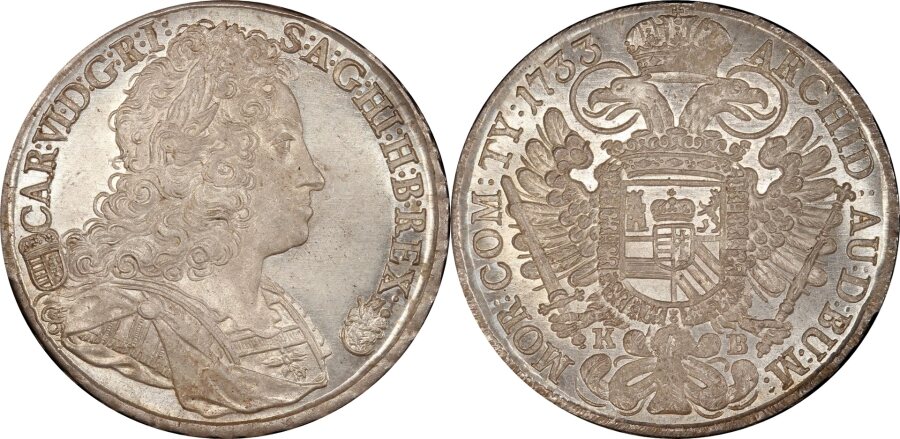
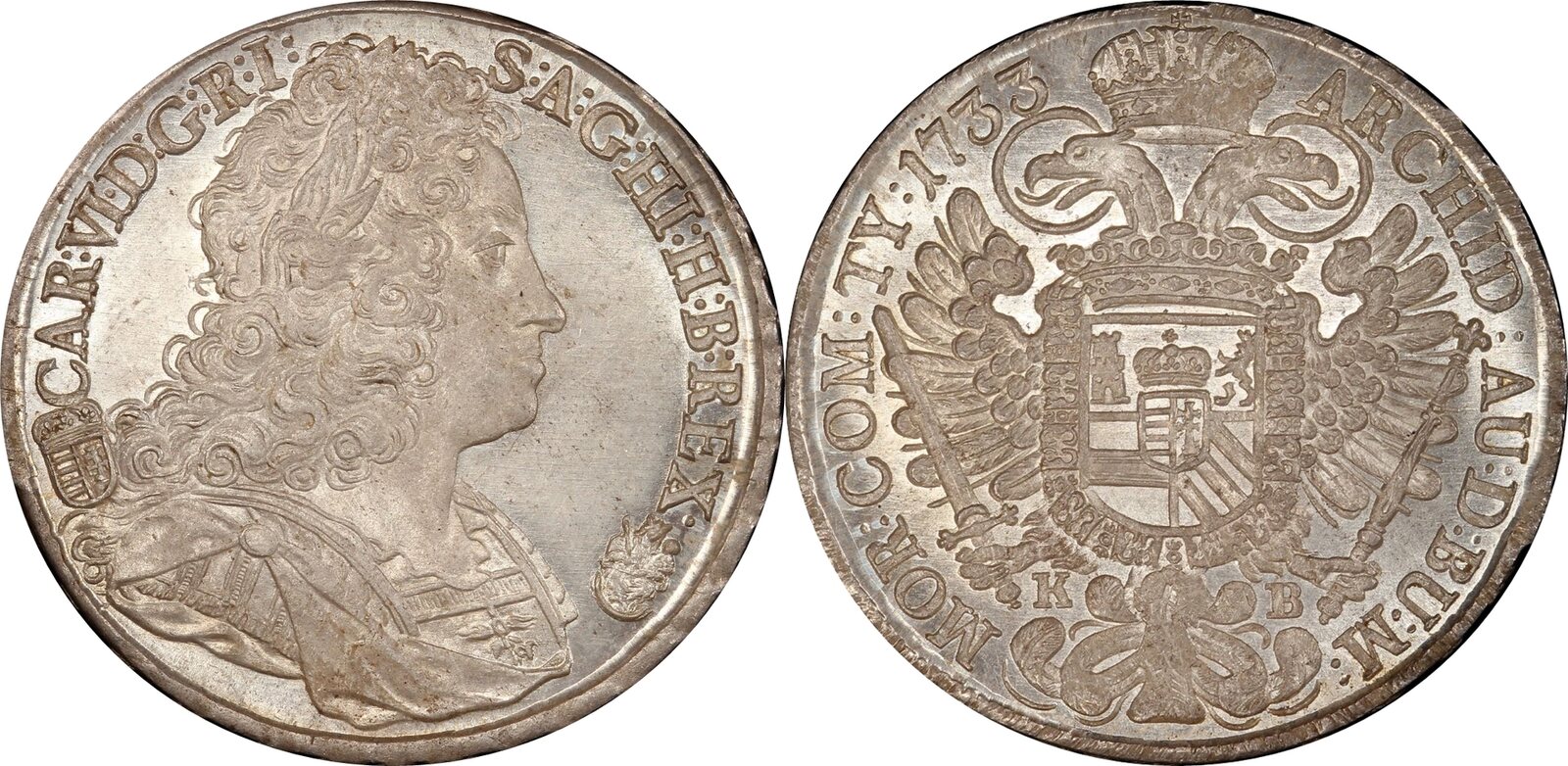
1733-KB. Charles VI (1711-1740) Taler. DAV-1060. Herinek 448, Huszár 1605. Kremnitz Mint. Top end piece of this scarcer mint issue. Lusterous piece, superb for the type. NGC MS-65.
|
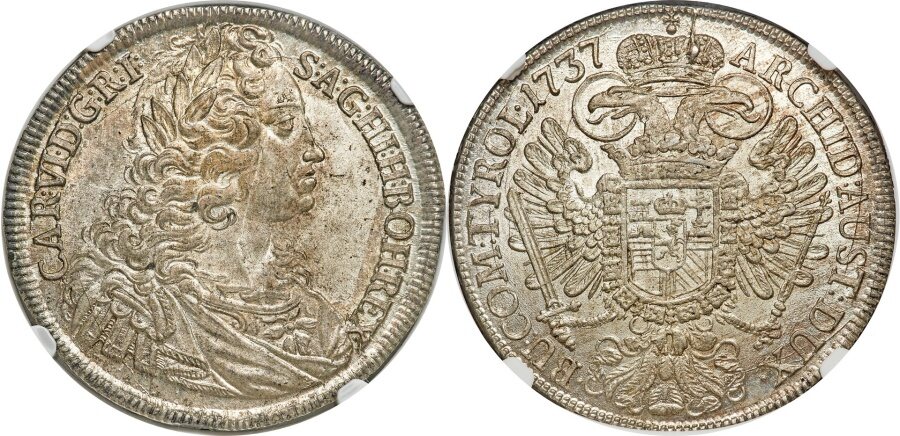
1737. Austria. Charles VI (1711-1740) Taler. DAV-1087. KM-1503.2. Prague mint. Obv: Laureate, draped, and armored bust right, wearing Order of the Golden Fleece. Rev: Crowned double eagle
holding sword and scepter, coat-of-arms within Order chain on breast, Tyrolean eagle in center. This robust specimen features subtle gray surfaces and a tremendous array of lustrous brilliance. An
exceptional Taler for the connoisseur of crown sized coins or issue from the Holy Roman Empire. NGC MS-64+.
|
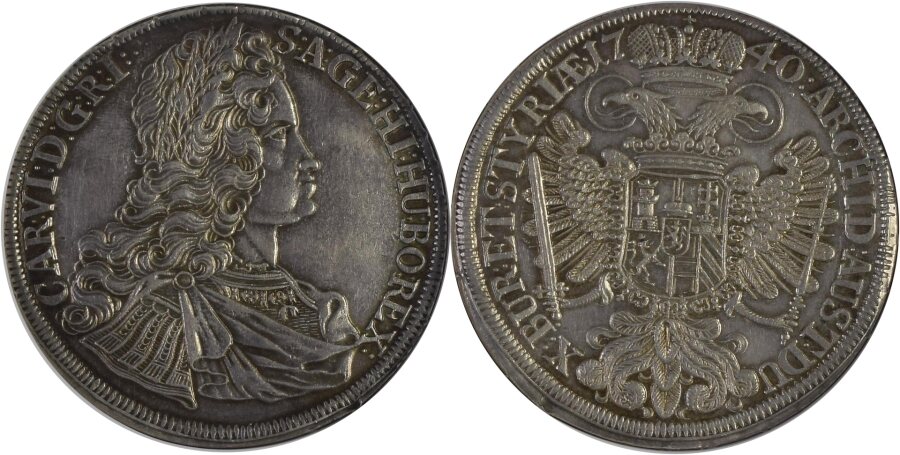
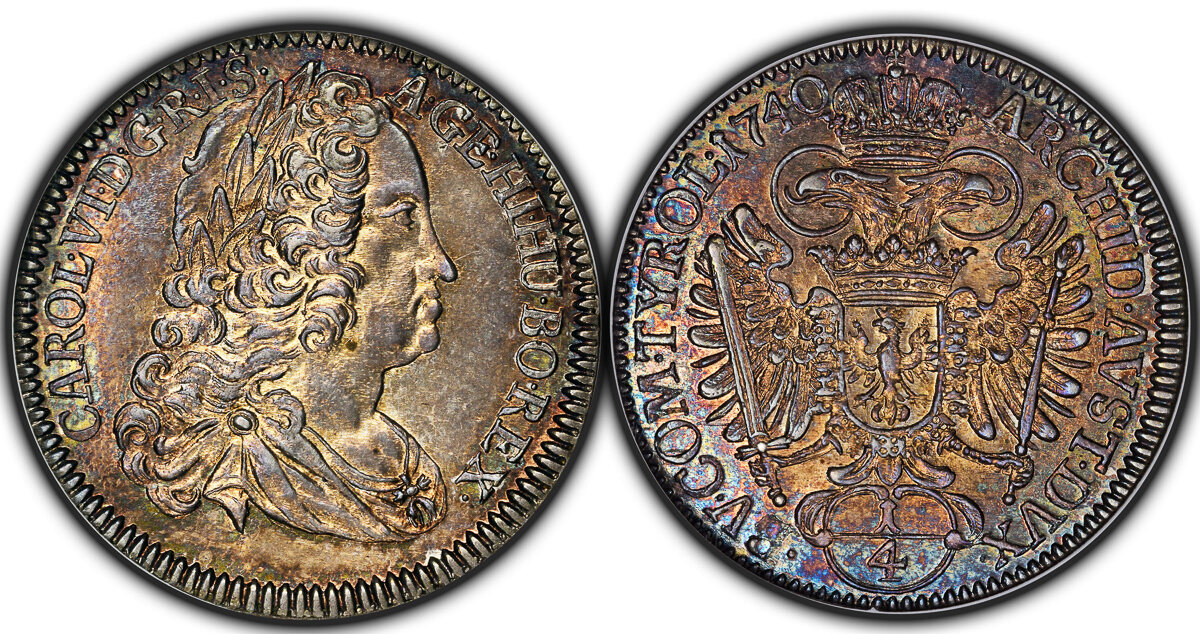
| 1740. Austria. Charles VI (1711-1740) Taler. DAV-1043. Herinek-328, CNA 224-b-5. Graz Mint. Obv: Laureate, draped, and armored bust right, wearing Order of the Golden Fleece. Rev: Crowned double eagle holding sword and scepter, coat-of-arms within Order chain on breast, Tyrolean eagle in center. This robust specimen features subtle gray surfaces and a tremendous array of lustrous brilliance. An exceptional Taler for the connoisseur of crown sized coins or issue from the Holy Roman Empire. NGC MS-63. |