Origins of the coin
The Taler
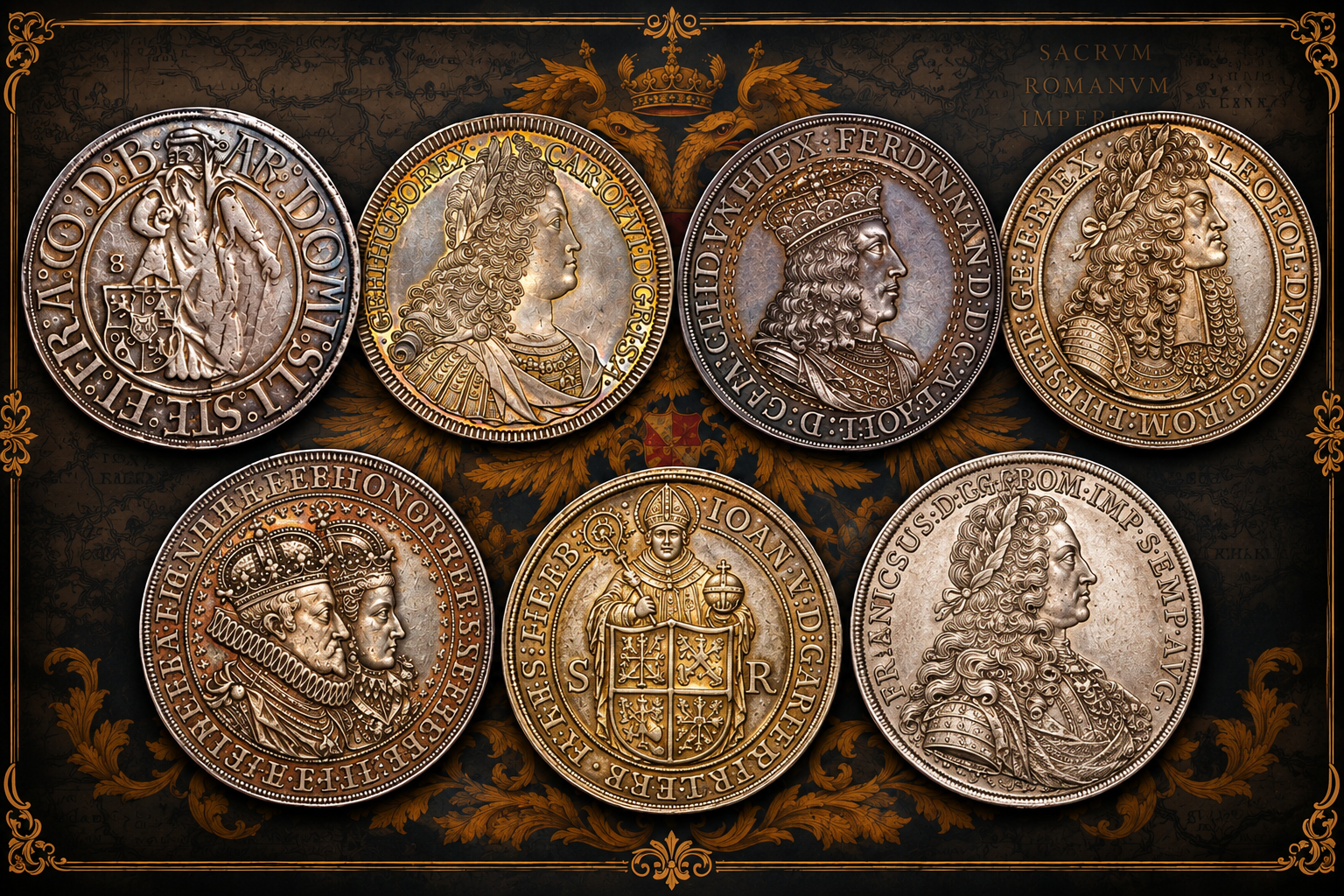
The large silver taler has roots reaching back to the mid-1400s. By the late fifteenth century, much of Europe's coinage had been worn down by decades of war-driven debasement, compounded by a long, steady drain of silver and gold eastward to pay for spices, silk and porcelain from India, Indonesia and beyond.
In 1486, Archduke Sigismund of Tyrol ordered his Hall mint to strike a coin unlike anything then in circulation — a silver piece worth a full gold gulden. It set off five centuries of imitation and innovation.
Within a generation, a Bohemian silver strike gave the coin its lasting name — taler — and from there it spread across Europe and the Atlantic, changing with new minting technology at every stage, all the way to the American dollar.
Background
A currency worn thin
By the close of the fifteenth century, most of Europe conducted its everyday trade in small, low-value silver coins — groschen, pfennigs, deniers — many of them worn, clipped, or quietly debased by rulers stretching scarce silver further to cover the costs of near-constant warfare.
At the same time, a structural drain was working against Europe's silver supply from the outside. Venice and the other trading cities paid for spices, silk and porcelain from India and the East largely in precious metal, since Europe had comparatively little the East wanted in return. Bullion flowed steadily eastward with each trading season and rarely came back.
What changed the equation was geology rather than policy. Rich new silver deposits were being opened in the Alps through the later 1400s — in Tyrol, in Saxony, and soon in Bohemia — giving a handful of rulers, for the first time in generations, more silver than their existing small-denomination coinage knew what to do with. The raw material for something new was suddenly there. What it needed was a ruler willing to use it.
- Raw material
Alpine silver
Rich new deposits opened in Tyrol, Saxony and Bohemia gave mints far more silver than small coinage could use.
- From 1486
Hand hammering
A blank disc between two dies, struck by hand — one hammer blow (or several) transferred the whole design at once.
- From the 1550s
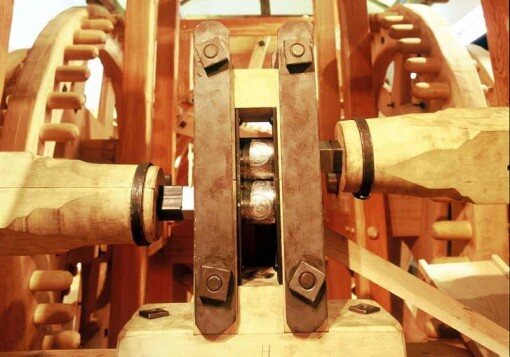
Roller press
Hall's own innovation: a silver strip fed between two engraved cylinders, striking a continuous run of coins.
- 17th–19th century
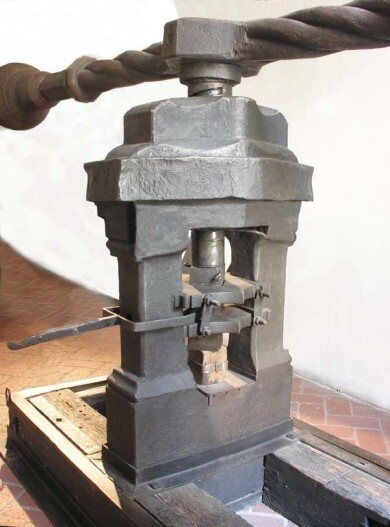
Screw press
A weighted, spinning screw drove the die down with controlled force — the standard until steam power took over.
Minting Techniques
From hammer to screw press
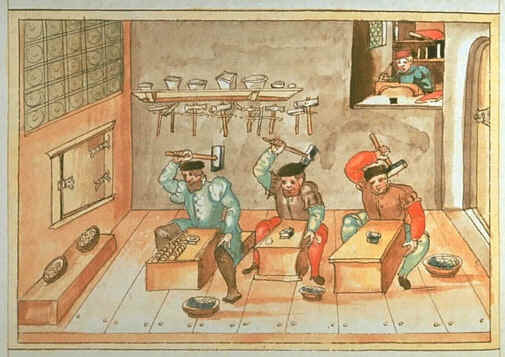
For most of the taler's early history, coins were struck entirely by hand: a lower die set into an anvil, a blank silver disc placed on top, an upper die positioned above it, and a mint worker swinging a hammer down to transfer the design in one blow — or several, if the first didn't fully strike.
The breakthrough came at the same Hall mint that had struck Sigismund's original guldiner. From the 1550s, Hall pioneered the roller press: a strip of silver fed between two cylindrical dies engraved around their circumference, striking a continuous run of coin designs as the rollers turned — far faster and more consistent than hammering, and copied by mints across the empire within a generation.
The screw press eventually became the dominant technology across most of Europe, using a weighted, spinning screw to drive the die down with controlled, repeatable force. It remained standard at many mints well into the industrial era, before steam and then electric power took over in the nineteenth century — the final stage in a five-century story that began with a single hammer blow in Tyrol.
The Guldiner
Sigismund's silver gulden
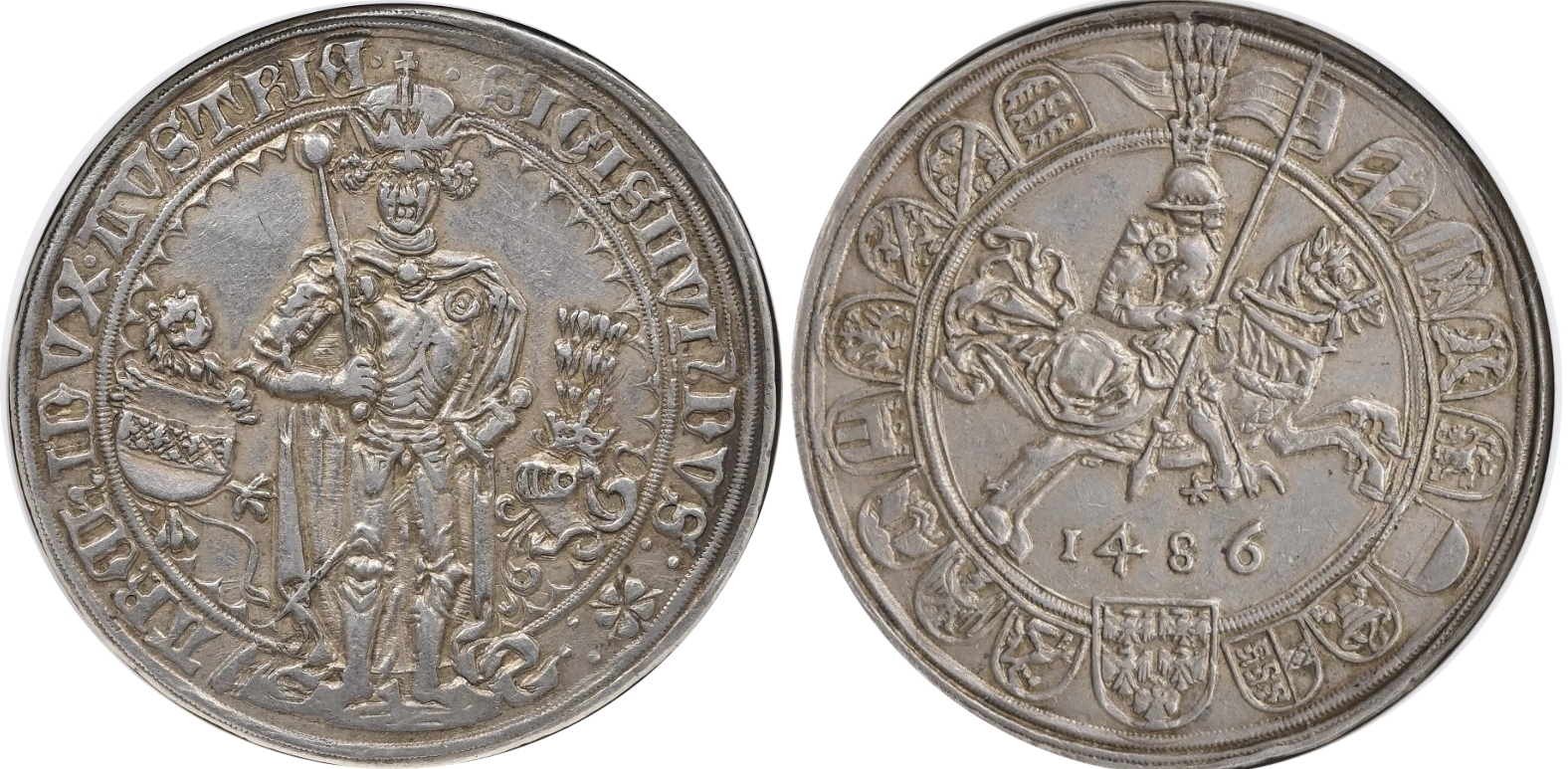
That ruler was Archduke Sigismund of Tyrol, sitting on the rich silver mines around Schwaz and governing from Innsbruck. In 1486 he ordered his mint at Hall to strike a large new silver coin, sized and valued to match the gold gulden then used in international trade — hence its name, the guldiner, meaning roughly "silver equivalent of the gulden."
It weighed close to 31 grams, nearly nine times the silver content of the small coins then in daily use, and some issues carried something rarer still for the period: a genuine attempt at a lifelike portrait of Sigismund himself, rather than the stylized, symbolic royal image that had served European coinage for centuries.
Production stayed modest at first, limited by how much silver Hall could actually process, and the guldiner didn't immediately displace anything beyond Tyrol's own borders. But it settled a question that had been open for decades: a large, trustworthy silver trade coin was technically achievable and commercially desirable. Other rulers were watching, and it would not take them long to act on it.
The Joachimstaler
The valley that named a currency
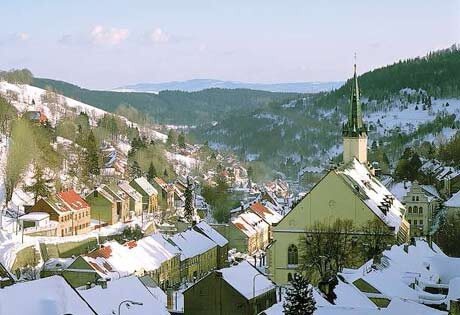
The decisive moment came thirty years later, in a different valley entirely. In 1516, an enormous silver deposit was discovered at Joachimsthal in Bohemia — today Jáchymov in the Czech Republic — on land controlled by the Count of Schlick family.
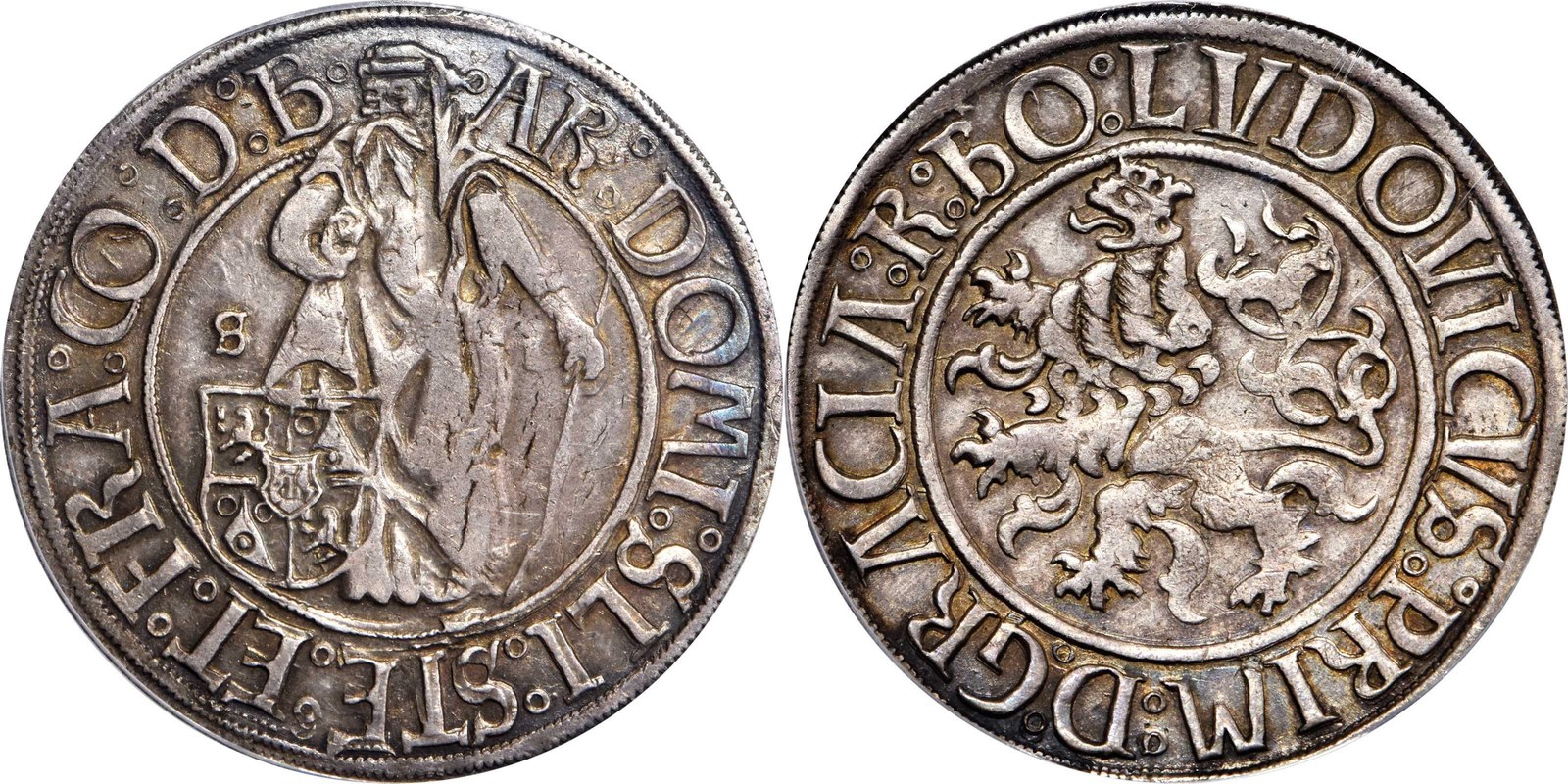
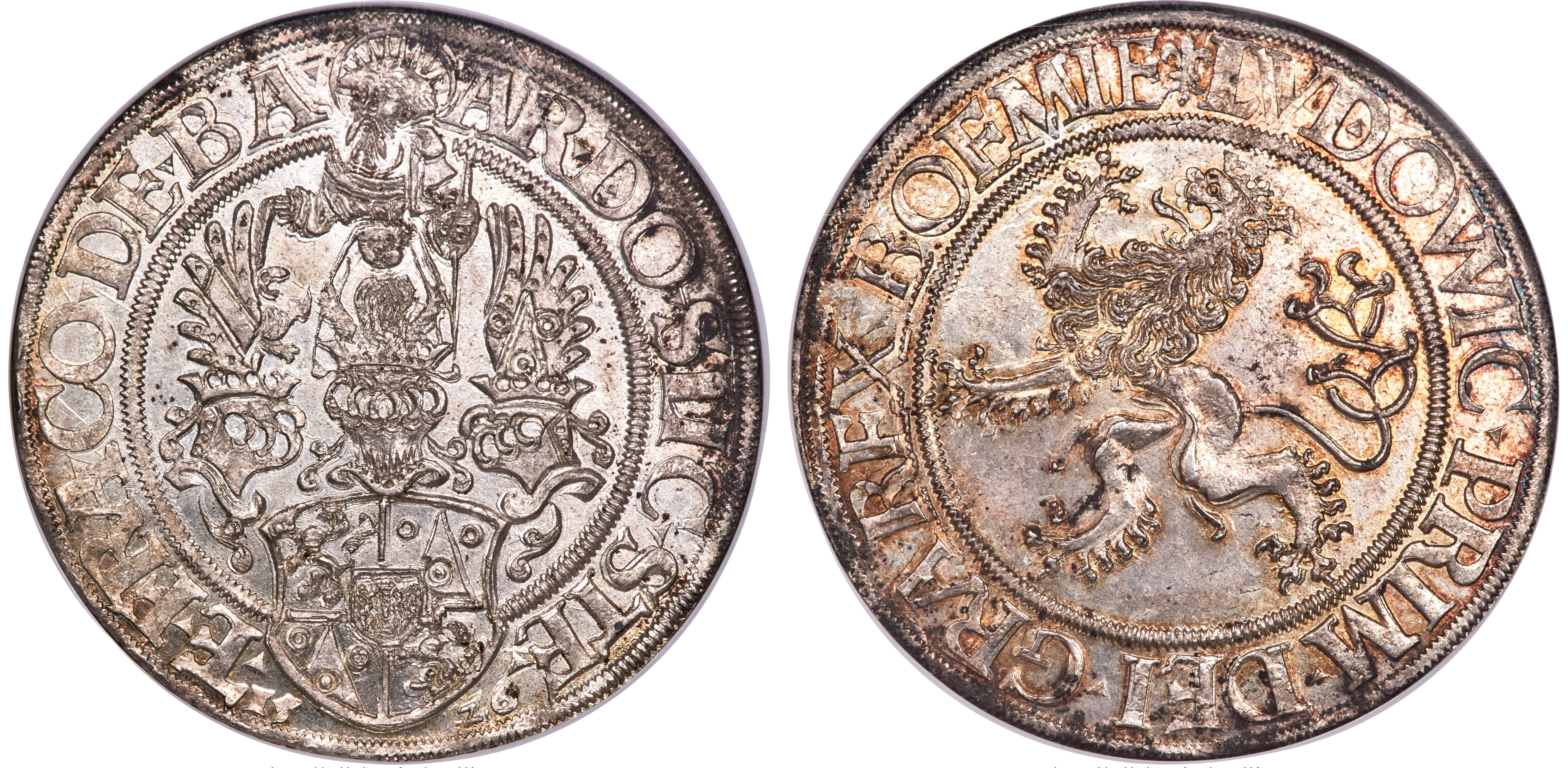
The Schlicks moved quickly. Holding their own minting rights, they began striking large silver coins on the same standard Sigismund had set thirty years earlier, stamped with an image of Saint Joachim, patron of miners, and the Bohemian lion. Local and then broader usage shortened "Joachimsthaler" to simply "thaler" within a generation.
What made Joachimsthal decisive wasn't the design — it was the sheer scale of the mine. Output let the Schlicks strike coins by the hundreds of thousands each year, dwarfing anything Hall had managed, and by the 1520s the Bohemian crown had moved to bring the valley's lucrative minting rights under direct royal control. By then, though, the name had already spread across German-speaking Europe and outlasted the family that coined it.
Taler's Global Expansion
From Brunswick to the Arabian Peninsula
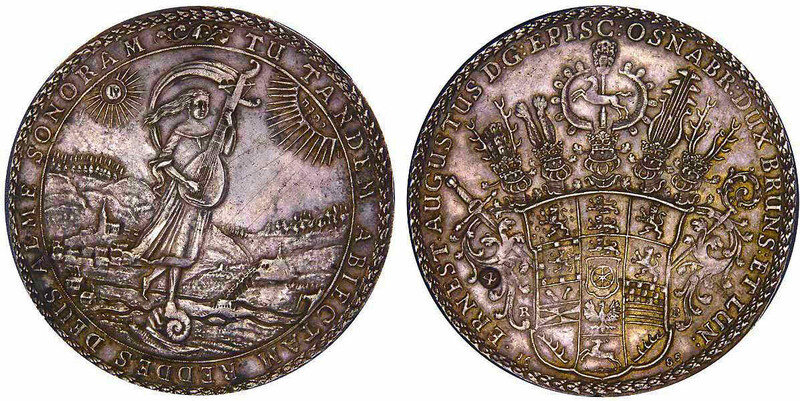
Once established, the taler didn't stay confined to Central Europe. German mints — Brunswick foremost among them — began striking enormous multiple-taler pieces called löser through the late 1500s and 1600s, some exceeding 450 grams of silver and 12 centimetres across, rarely spent but prized as gifts and displays of wealth.
Within the Holy Roman Empire, the taler became the benchmark other currencies were measured against: Prussia's Reichsthaler, the Conventionsthaler introduced in 1754, and eventually the Vereinsthaler that unified German and Habsburg coinage standards from 1857 until the mark replaced it in 1908.
The name travelled even further than the silver. The Dutch daalder and rijksdaalder lent their name to Romania's and Moldova's currencies; Scandinavia's daler circulated under Danish, Swedish and Norwegian names into the 1870s; and English speakers used "dollar" for the taler for two centuries before the newly independent United States adopted the word for its own currency. The Maria Theresia taler, meanwhile, kept circulating as trusted trade silver in Ethiopia and across the Arabian Peninsula well into the twentieth century — long after the coin's original mints had stopped striking it.
The roots and development of the Thaler-sized silver coin date back to the mid-1400s. As the fifteenth century drew to a close the state of much of Europe's coinage was quite poor because of repeated debasement induced by the costs of continual warfare, and by the incessant centuries-long loss of silver and gold in indirect one-sided trades importing spices and porcelain and silk and other fine cloths and exotic goods from India, Indonesia and the Far East.