Austrian Noble Houses and Their Coinage
The princes beneath the emperor
When we think of Austrian talers, we naturally think of the Habsburgs. Ferdinand, Rudolf, Leopold, Charles, Maria Theresa and Joseph dominate the numismatic story. Yet beneath the imperial dynasty was another world of powerful noble families, a select number of whom received one of the most visible privileges of rank: the right to issue coins in their own name.
These noble-house talers have always fascinated me. They belong unmistakably to the Habsburg world, often sharing its mints, monetary standards and artistic language, yet they speak with a different voice. Instead of the emperor, we encounter a prince or count. Instead of imperial arms, we may see an elaborate family shield, supporters, a princely mantle or the chain of the Golden Fleece. In silver, a family could announce lineage, status and political standing.
Money, privilege and power
The Holy Roman Empire was not a centralized state in the modern sense. Authority was distributed among kingdoms, duchies, principalities, bishoprics, free cities, counts and other territorial lords. Coinage reflected that structure. A minting privilege did not necessarily mean that a noble family operated its own permanent mint. Some issues were produced at established facilities such as Vienna, Prague, Kremnitz or Nuremberg. What mattered was whose authority appeared on the coin.
For the collector, this makes noble-house coinage especially revealing. A title gained at court, a military career, an inheritance or a strategic marriage could eventually appear in a coin's legends and heraldry. The taler becomes a miniature record of how a family rose within the Habsburg system.
Schlick: where the taler story begins
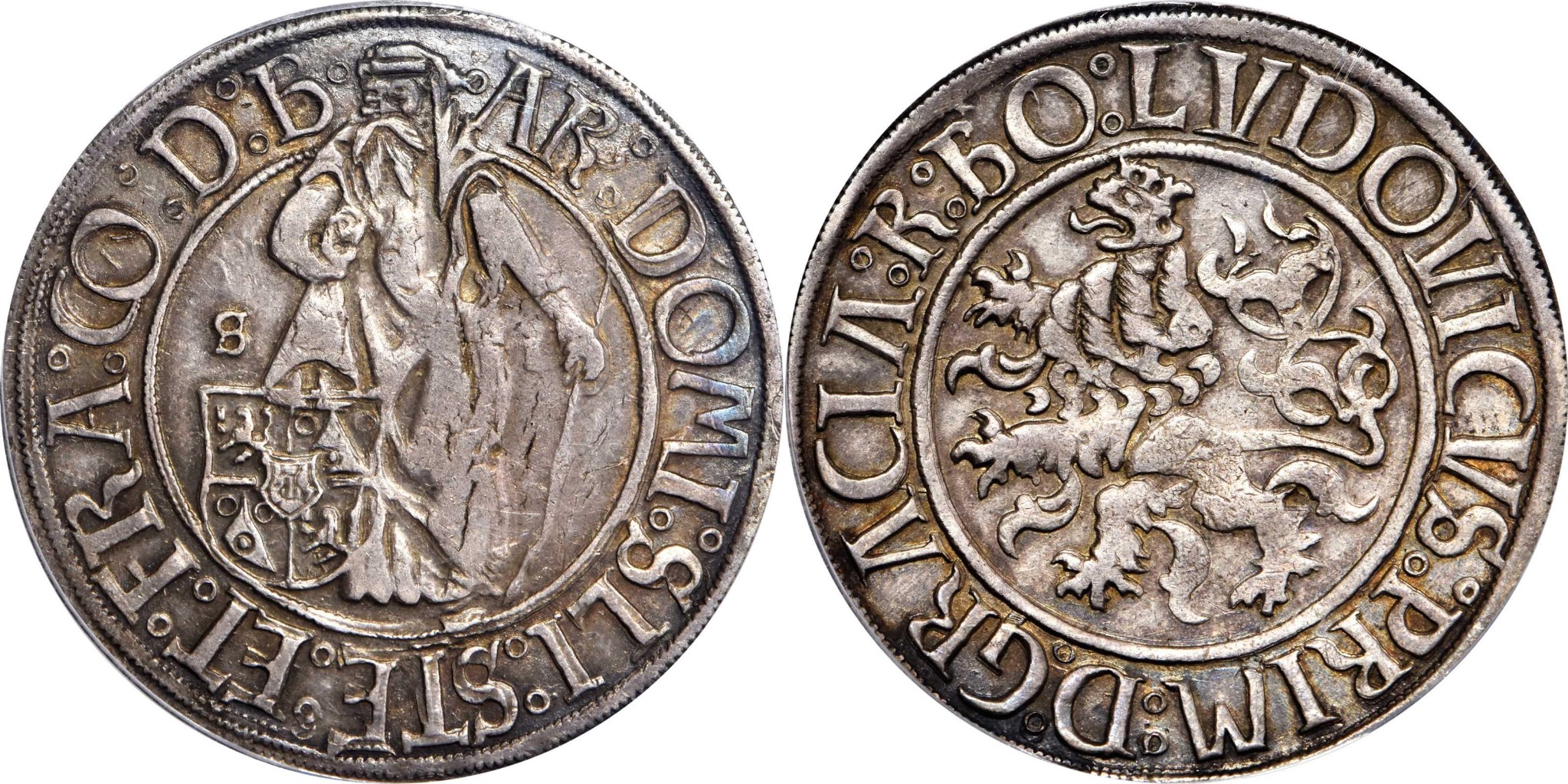
No noble family belongs more naturally at the beginning of this story than the Counts of Schlick. Their rich silver mines at Joachimsthal in Bohemia produced the large silver Joachimsthalers whose name was shortened to thaler or taler and ultimately contributed the word dollar. For anyone who collects talers, the connection is difficult to overstate: a noble family's mining wealth and coinage privilege helped give the denomination its enduring name.
The Schlicks also demonstrate how precarious noble power could be. Their minting rights were eventually curtailed and later political and religious upheaval brought confiscation and punishment to branches of the family. Their coins survive as tangible evidence of the extraordinary circumstances in which the taler emerged.
Eggenberg: from wealth to princely power
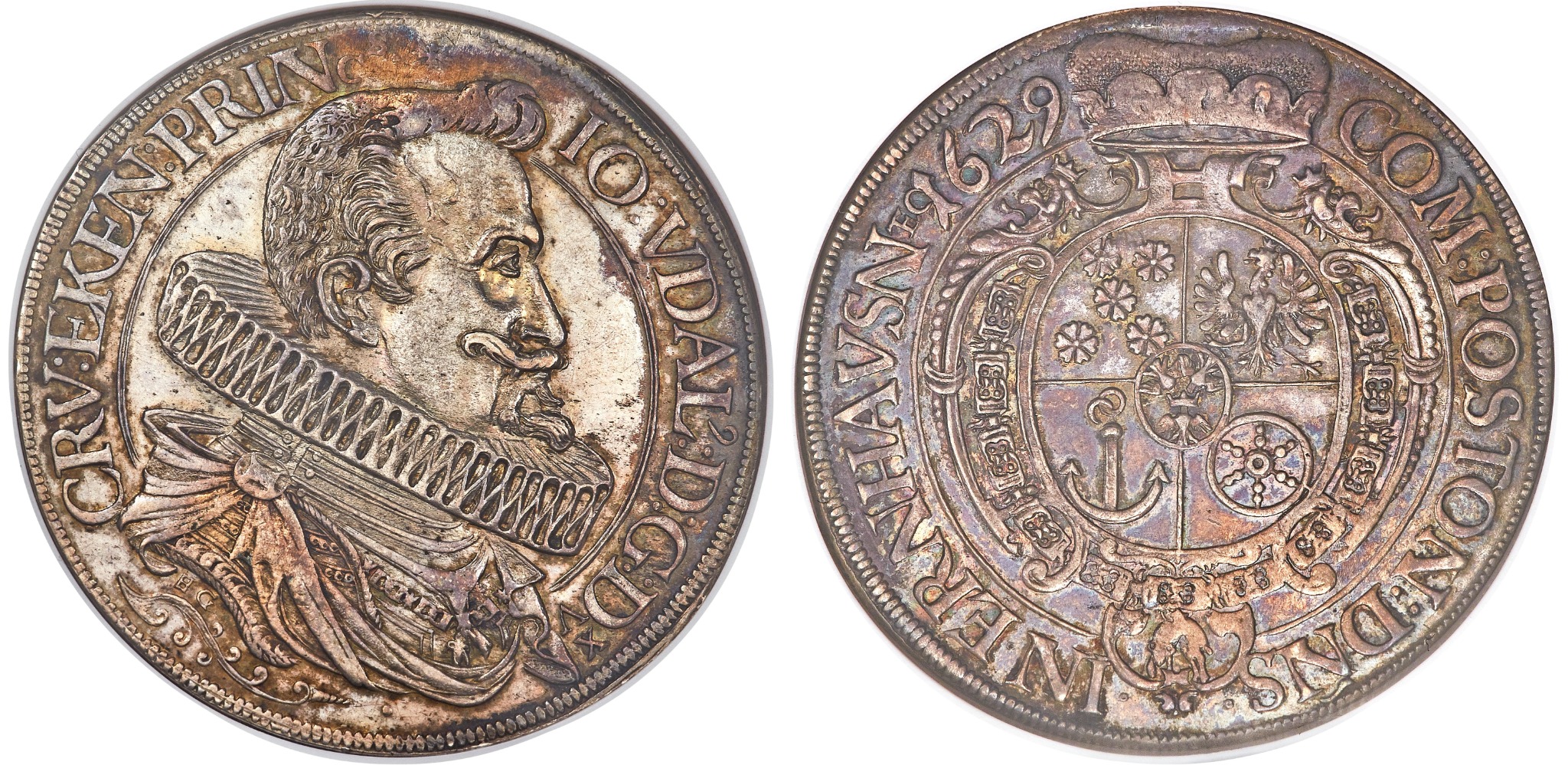
The House of Eggenberg tells a different story. From commercial and financial roots in Styria, the family rose spectacularly during the age of Ferdinand II. Hans Ulrich von Eggenberg became one of the emperor's most important advisers, and the family's ascent brought titles, estates and princely status.
The 1629 Johann Ulrich taler captures that rise beautifully. The formal portrait and family arms have the authority of a major state issue, yet the ruler is not the emperor. It is precisely this combination of Habsburg visual language and distinct family identity that makes noble-house talers so compelling.
Dietrichstein: heraldry as biography
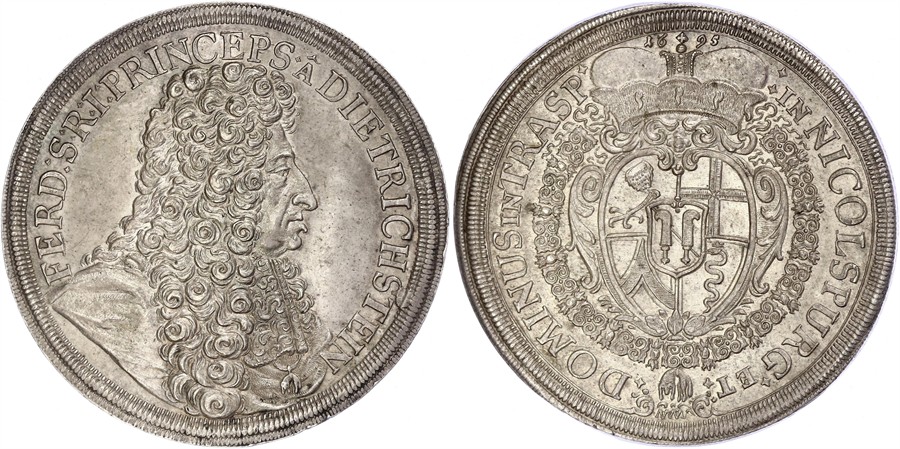
The Dietrichsteins rose from Carinthian origins to become one of the leading noble houses of Moravia, centered on Nikolsburg, today's Mikulov. Their 1695 taler of Ferdinand Joseph is particularly satisfying because the reverse demonstrates how much information noble heraldry can contain.
The elaborate crowned arms, supported by lions, are not merely decoration. Quarterings, crests, supporters and orders could record generations of inheritance, marriage and territorial claims. On these coins, heraldry becomes a second text - a visual biography of the house.
Auersperg: prestige in only 260 coins
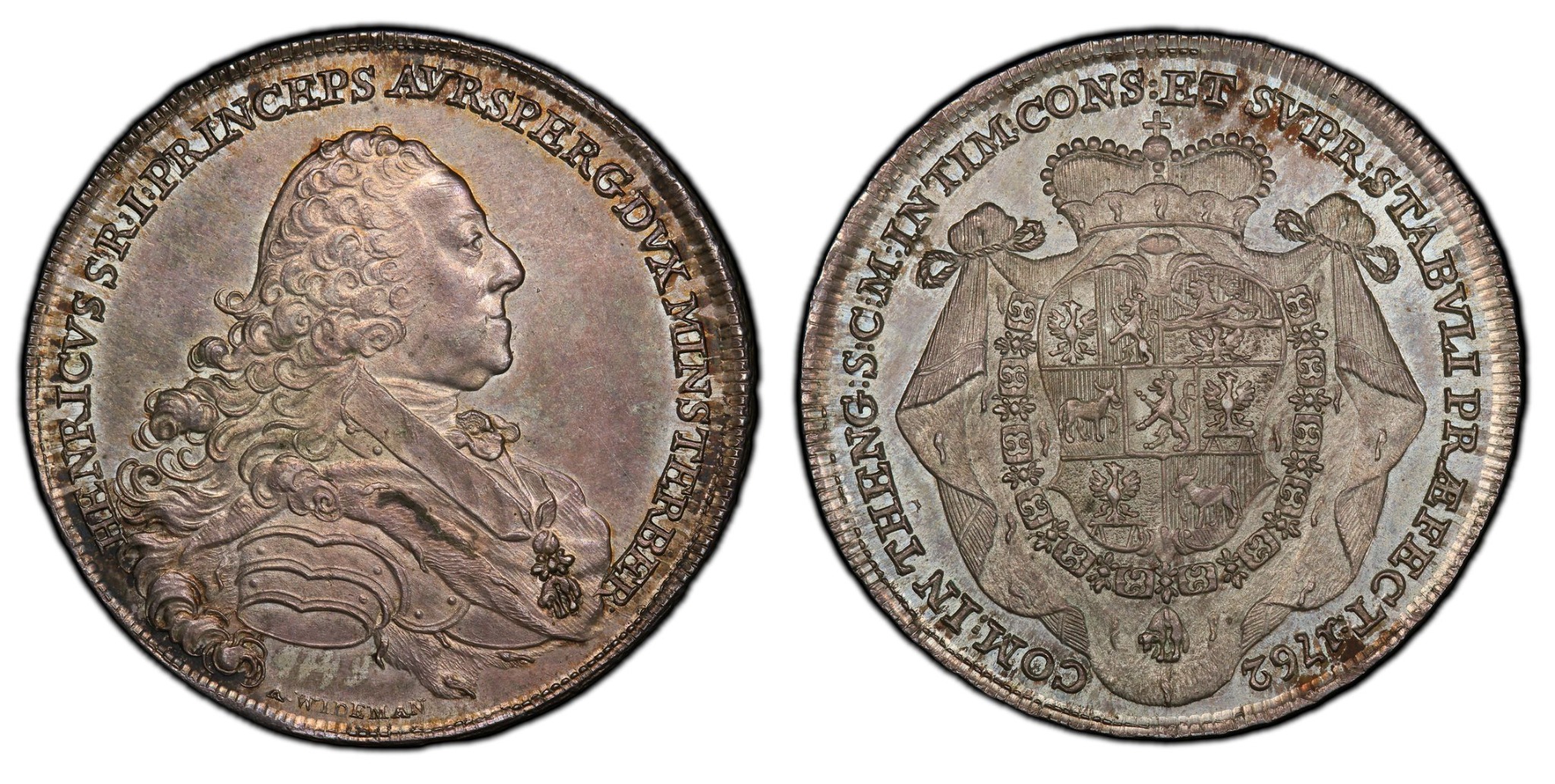
The Auerspergs originated in Carniola and rose into the princely aristocracy during the seventeenth century. Their coinage also illustrates one of the great attractions of noble-house issues: some were produced in remarkably small numbers.
The 1762 taler of Prince Heinrich von Auersperg, struck at Vienna, had a published mintage of only 260 pieces. It is a full crown-sized silver coin with an imposing princely portrait and elaborate arms, yet only a few hundred were made. That contrast between visual grandeur and tiny production is one reason these issues can be so difficult to find in exceptional condition.
Batthyany and Esterhazy: the Hungarian magnates
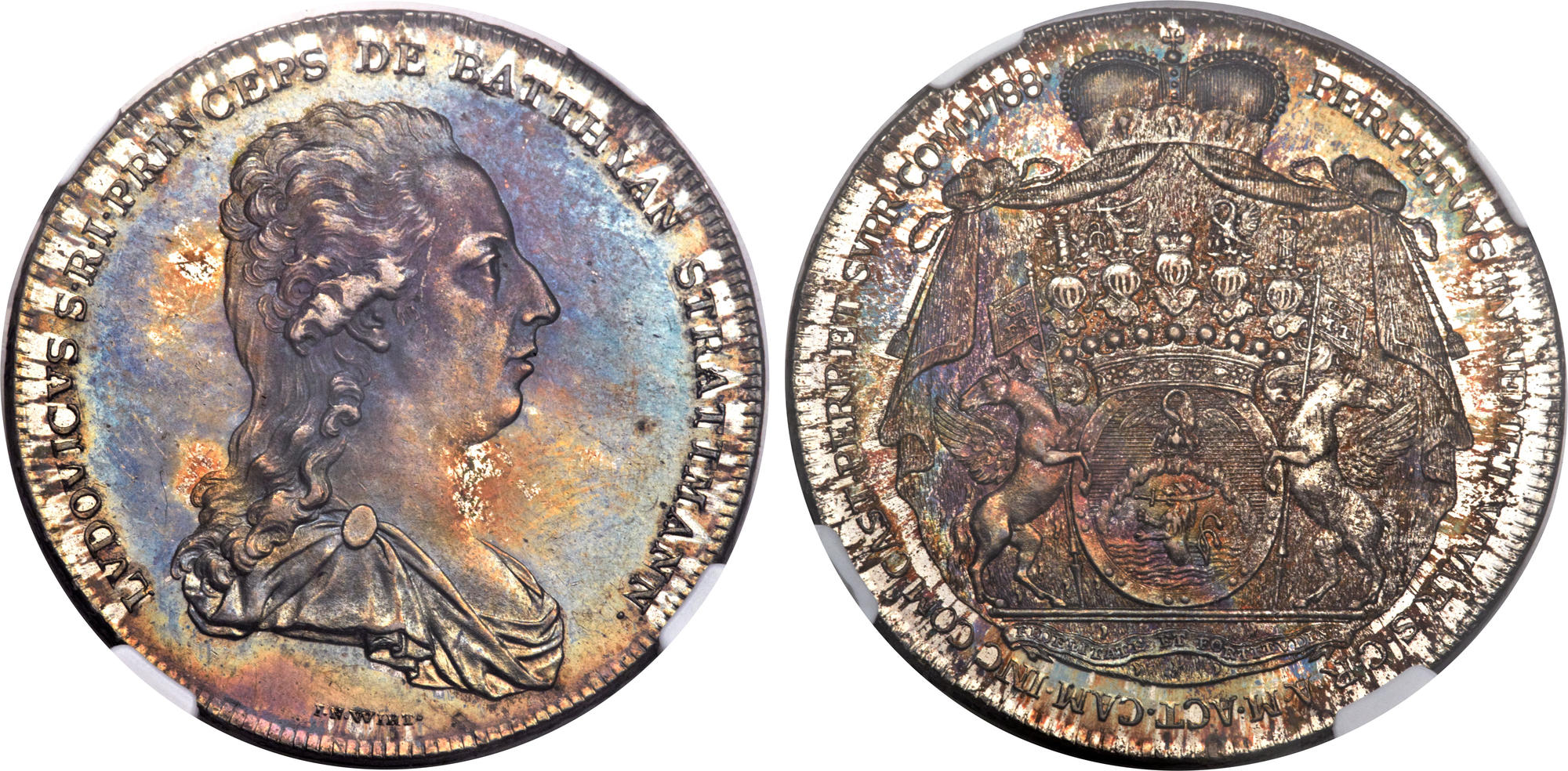
The Habsburg monarchy was never simply Austrian. Some of its most powerful aristocratic families came from the Kingdom of Hungary. The Batthyanys combined enormous landed influence with long imperial and military service. Karl Joseph Batthyany received princely rank and coinage rights after decades of service, and one 1764 taler variety represented in the collection had a published mintage of only 300.
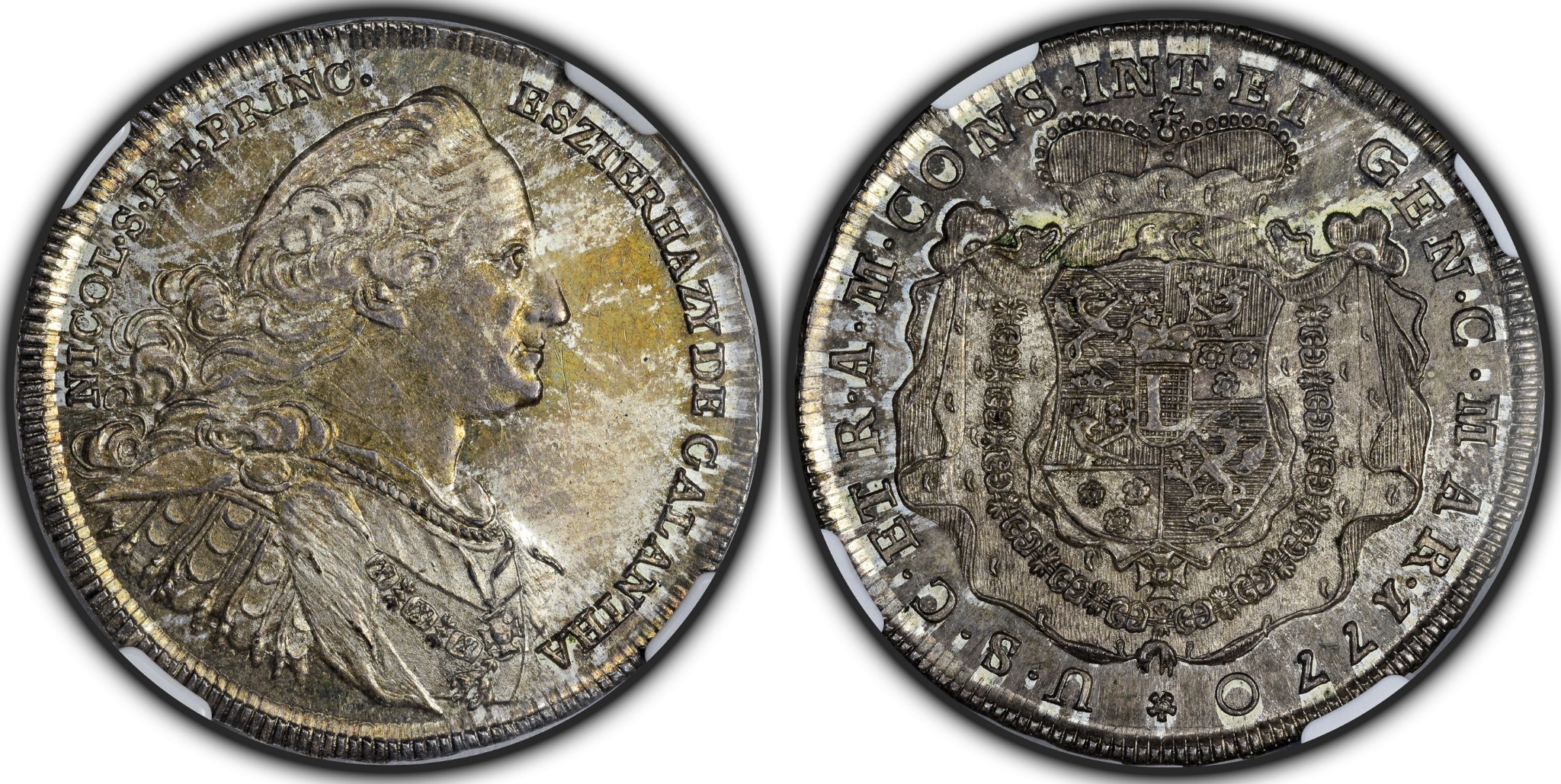
The Esterhazys were among the wealthiest and most culturally important magnate families of the monarchy. Prince Nikolaus Joseph Esterhazy, famous as the patron of Joseph Haydn, exercised his coinage privilege only briefly. His 1770 series included a ducat, taler and half taler. The half taler in the Taler Universe collection had a published mintage of only 500. A single coin therefore connects Habsburg politics, Hungarian aristocracy, numismatics and one of Europe's great musical courts.
Schwarzenberg: dynasty in silver
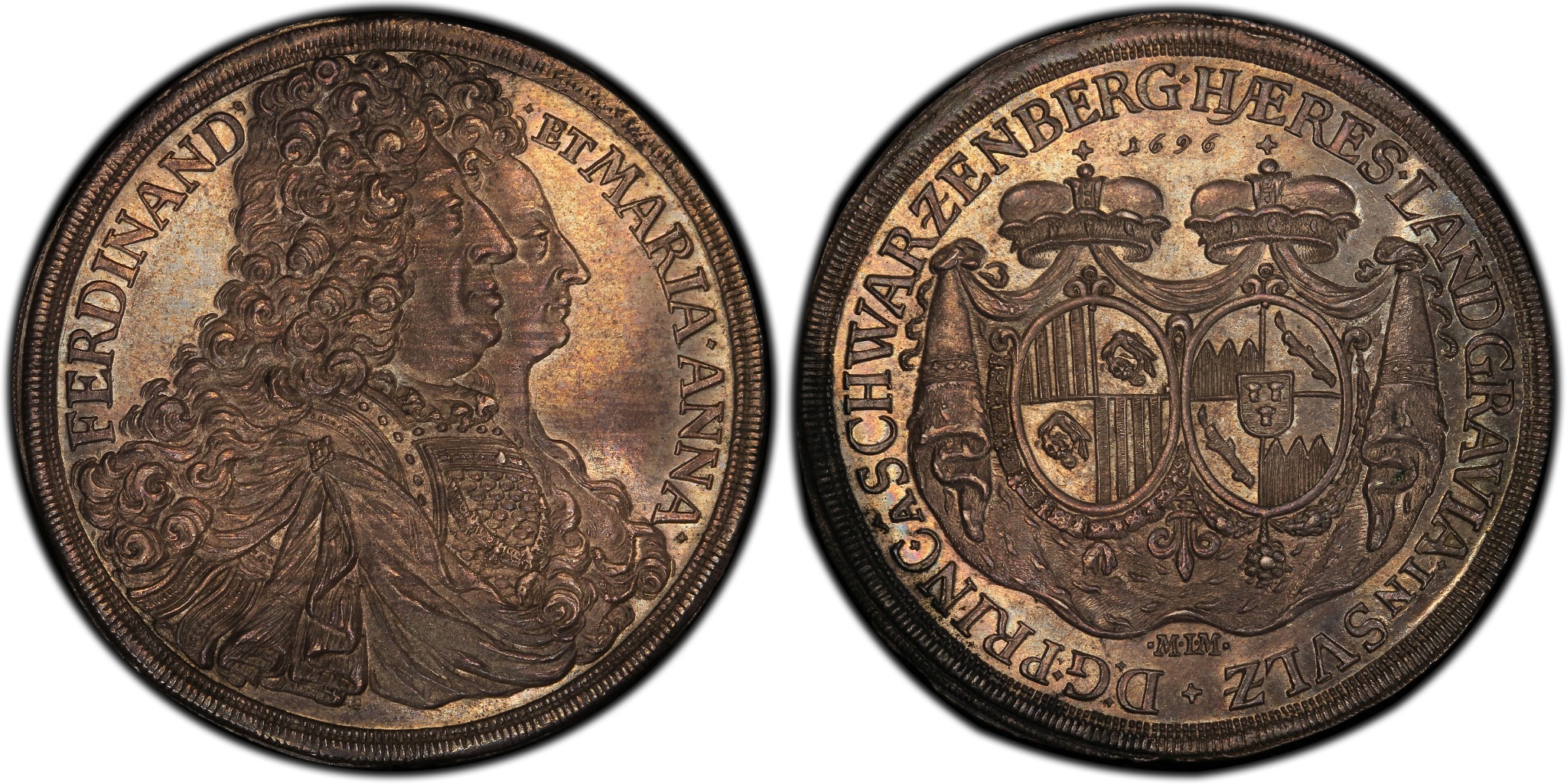
The Schwarzenbergs became one of Central Europe's most prominent aristocratic families, with major estates in Bohemia and roots in Franconia. Their 1696 taler of Ferdinand Wilhelm Eusebius and Maria Anna is one of my favorite noble-house designs.
The conjoined portraits transform the coin into a dynastic statement. On the reverse, two crowned and mantled shields reinforce the message of marriage, inheritance and legitimacy. The result feels almost medallic - a monetary object that is equally a portrait of the family as an institution.
A map of power in silver
Other houses in the collection - Khevenhuller-Metsch, Paar, Trautson and Windisch-Gratz among them - broaden the picture. Individually, their talers can appear to be isolated rarities. Seen together, they reveal a system.
The emperor stood at the center, but around him was a network of families who served as generals, ministers, diplomats, governors and court officials. They accumulated estates, married into other great houses, competed for rank and imperial favor, and occasionally received the privilege to place their own identity on money.
That is what I find most interesting about these coins. Imperial talers tell the Habsburg story from the center. Noble-house talers show how power looked one level below the throne.
Why I collect them
From a collecting standpoint, noble-house talers offer something different from a traditional ruler or date series. I do not feel compelled to own every issue. I look for coins where the history, portrait, heraldry, scarcity and quality of the individual specimen come together.
The best examples can be extraordinarily rare, but rarity alone is not enough. The coin still needs to tell a story. A Schlick issue takes us to the origins of the taler. Eggenberg takes us into the court of Ferdinand II. Dietrichstein opens the world of Moravian aristocracy. Auersperg demonstrates how limited a princely issue could be. Batthyany and Esterhazy bring us into the world of the Hungarian magnates. Schwarzenberg shows how marriage and dynasty could be expressed in silver.
Together they make the Habsburg world more complete. The emperors occupied the throne, but beneath them existed an entire universe of princes, counts, soldiers, courtiers and dynasties whose ambitions helped shape Central Europe. Fortunately for us as collectors, some of them left their stories behind in silver.